The Asia Institute is the home of studies in Asian languages and societies. Our academics are at the forefront of research into the intellectual, legal, politico-economic, cultural and religious traditions, and transformations of Asia and the Islamic world.
Melbourne Asia Review
Melbourne Asia Review is the Asia Institute’s quarterly online journal, which publishes insight and commentary on Asia and the Islamic world by our researchers, students, and international academic collaborators in English, Hindi, Japanese and Mandarin.
Explore our latest news, podcasts and events

Study languages and cultures from across the Asian continent
Our disciplines span from the Middle East to East and South East Asia.
Placement testing and accreditation exams
Learn more about language placement tests for current students or Language Other Than English (LOTE) accreditation exams for prospective teachers.
Learn about our research centres, hubs and units
-
Centre for Contemporary Chinese Studies (CCCS)
CCCS plays a vital role in shaping an Australian approach to the study of contemporary China.
-
National Centre for Contemporary Islamic Studies (NCCIS)
NCCIS provides outstanding higher education level programs in Islamic studies.
-
Korean Studies Research Hub
The KSRH is an inter-disciplinary virtual hub for collaborative research on Korean Studies at the University of Melbourne.
Our people
Prof Andrew Rosser
-
Asian Studies
The countries of Asia are Australia’s largest trading partners and are of vital importance to Australia’s economic growth and security. For Australians, Asia increasingly defines who we are and our place in the world.
-
Arabic Studies
Arabic is the fifth most commonly spoken native language in the world, with about 230 million people speaking it as their first language. Arabic studies students at the Asia Institute will learn not only about reading, writing and speaking in Arabic, but also living and interacting in the ‘Arab way’.
-
Chinese Studies
China is a ‘rising power’ in the Western Pacific region whose future importance for Australia is hard to over-estimate. China’s current levels of investment in research and development and in the tertiary sector indicate that China is poised to make a very rapid transition to a ‘knowledge economy’.
-
Gender Studies
Our program explores the significance of gender and sexuality on a range of discourses embedded within culture, identity and global history.
-
Indonesian language and studies
Indonesia’s geographic proximity and strategic importance to Australia make it vital to understand its peoples, politics, history, languages and cultures.
-
Islamic Studies
The Islamic studies program at the University of Melbourne provides students with the opportunity to study the development of Islamic thought and Muslim societies from a broad multidisciplinary perspective.
-
Japanese Studies
The study of Japanese language and culture offers the individual new insights into a deep and diverse culture, and also provides important contrasts when considering the role of various nations in the Asia Pacific region.
-
Korean Studies
Studying the Korean language as well as its contemporary history, politics, security, economy and society provides students with a deeper understanding of the issues pertaining to the Korean peninsula and its neighbours.
-
Translation and Interpreting Studies
The Master of Translation and Interpreting at the University will give you comprehensive theoretical, practical and academic training to prepare you for your career across Chinese and English-speaking worlds.
Director
Director's welcome
As Director, it is my great pleasure to introduce the Asia Institute, a School of the Faculty of Arts at the University of Melbourne.
The Asia Institute is the University of Melbourne’s key centre for studies in Asian societies, languages and cultures. Our programmes include the teaching of Arabic, Chinese, Indonesian, Japanese and Korean languages, as well as the study of their modern societies. We also offer Islamic Studies, Asian Studies and Translation Studies more broadly to provide comparative perspectives. The Asia Institute has close links with other Schools and Faculties across the University, and our programmes are strongly interdisciplinary in focus.

Academic staff at the Asia Institute have an array of research interests and specialisations which may be loosely grouped into five broad clusters: Asian Civil Society, Asian Governance Transformations, Islam and Politics in Contemporary Asia and the Middle East, Language Dynamics in the Asia Pacific, and finally Migration, Gender and Environment. Academics are regularly called on by local and national media sources to provide expert opinion on a range of contemporary and historical issues that arise in scholarly, public and policy debates. They are involved in collaborative projects with scholars based in the region and beyond.
The Asia Institute also has an exciting roster of visiting scholars, regularly hosts conferences and is influential in leading international peak organisations. Our close involvement with the broader community is further demonstrated by our hosting of the National Centre for Contemporary Islamic Studies and the Centre for Contemporary Chinese Studies.
The importance of Asia and the Middle East to Australia – and the world – continues to grow at a significant pace. Many of Australia’s largest and most important trading partners are based in Asia, and diplomatic exchanges between Australia and the Middle East are expanding in both number and importance. The Asia Institute strives to provide leadership in the study of the rich intellectual, legal, political, economic, cultural and religious traditions of these vital regions.
On behalf of our staff and students, as well as our alumni and friends, I am delighted to welcome you to the Asia Institute.
Professor Vedi Hadiz, Director, Asia Institute.
Asian Studies
Prof Andrew Rosser
Dr Ken Setiawan
Tutor in Asian Studies (Teaching Periodic)
We are currently unable to retrieve the Staff contact information requested.
Asian Studies honorary staff
Arabic Studies

Dr Abdul-Samad Abdullah
Tutor in Arabic Studies (Teaching Periodic)
We are currently unable to retrieve the Staff contact information requested.
Centre for Contemporary Chinese Studies
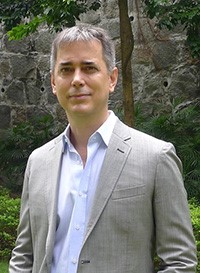
A/Prof Anthony Spires
Centre for Contemporary Chinese Studies honorary staff
Chinese Studies
A/Prof Ester Leung
Dr Craig Smith
A/Prof Anthony Spires
Tutor in Chinese Studies (Teaching Periodic)
Chinese Studies honorary staff
Gender Studies
A/Prof Kalissa Alexeyeff
A/Prof Ana Dragojlovic
Gender Studies honorary staff
Gender Studies affiliated staff
Dr Chloe Diskin-Holdaway
Prof Lan Anh Hoang
Dr Hannah McCann
Prof Fran Martin
Indonesian Studies
A/Prof Edwin Jurriens
Dr Ken Setiawan
Tutor in Indonesian Studies (Teaching Periodic)
Dr Monika Winarnita
Indonesian Studies honorary staff
Islamic Studies
Prof Abdullah Saeed
Islamic Studies honorary staff
Japanese Studies
A/Prof Ikuko Nakane
A/Prof Jun Ohashi
Tutor in Japanese Studies (Teaching Periodic)
Japanese Studies honorary staff
Korean Studies
Dr Nicola Fraschini
Tutor in Korean Studies
National Centre for Contemporary Islamic Studies
Prof Abdullah Saeed
Translation Studies
A/Prof Ester Leung
Dr Craig Smith
Tutor in Translation Studies (Teaching Periodic)
We are currently unable to retrieve the Staff contact information requested.
Professional
Mary Wang
The Asia Institute brings together researchers across a range of disciplines, creating a depth and breadth of expertise on Asia and the Islamic world.
Research centres, hubs and units
-
Centre for Contemporary Chinese Studies (CCCS)
CCCS plays a vital role in shaping an Australian approach to the study of contemporary China.
-
National Centre for Contemporary Islamic Studies (NCCIS)
NCCIS provides outstanding higher education level programs in Islamic studies.
-
Korean Studies Research Hub
The KSRH is an inter-disciplinary virtual hub for collaborative research on Korean Studies at the University of Melbourne.
Explore our research clusters and projects
-
Asian Civil Society
This research cluster employs an interdisciplinary approach to analyse the dynamically expanding role of civil society in contemporary Asia.
-
Asian Governance Transformations
How is governance in Asia changing? What is driving change and how is it being contested? What are the implications for human rights, democracy, social welfare, and foreign relations?
-
Gender, Environment and Migration
Researchers in this cluster investigate migration in Asia and Australia from gender, environmental, and policy perspectives.
-
Language Dynamics in the Asia Pacific
This research cluster explores the diverse languages of the Asia-Pacific region – their structures, use in context, roles within society, and how they are taught and acquired.
-
Islam and Politics in Contemporary Asia and the Middle East
This research cluster investigates how Islam plays a significant role in affecting political and social change today.
-
Research projects
Asia Institute’s research projects involve aspects of four target areas (Arabic and Islamic Studies, China, Indonesia, Japan) and also Australia’s relationship to Asia.
-
Undergraduate
Information about enrolments, placement tests, submissions and extensions. -
Honours, Graduate Diploma (Advanced), and Masters by coursework
Information about course requirements, compulsory subjects, supervision, thesis submissions, extensions, plagiarism and contacts. -
Graduate coursework
Information about student services, course requirements, submissions, extensions, academic honesty and more. -
Graduate research
Information about facilities, thesis submission and extensions, research administration, student services, handbooks and more. -
Future students
Information for future students wishing to undertake an undergraduate, graduate coursework or graduate research degree. -
Language placement tests
Take a Language placement test to determine what level of language studies you should be starting at. -
Language Other Than English (LOTE) accreditation exams
The Asia Institute holds up to three examinations for LOTE accreditation for prospective teachers of Arabic, Chinese, Indonesian and Japanese each year.
-
Graduate researcher students - Asia Institute
Our graduate researchers are working on a variety of research projects in the Asia Institute. Learn more about their work and their areas of expertise.